Ask เมื่อถามเทรดเดอร์ส่วนใหญ่ให้จำกัดความคำว่า breakout (การทะลุกรอบ) คุณจะได้คำตอบภายใน 4 วินาทีว่า: ราคาปิดเหนือแนวต้าน ซึ่งมันไม่ใช่สิ่งที่ผิด แต่มันแค่ไร้ประโยชน์ — เพราะมันอธิบายเพียงแท่งเทียนแท่งเดียว และไม่ได้บอกอะไรคุณเลยว่าต้องทำอย่างไร ต้องถือไว้นานแค่ไหน หรือจะรู้ได้อย่างไรว่าคุณเดาผิด
บทเรียนนี้จะเปลี่ยนคำจำกัดความนั้น ให้เป็นคำจำกัดความที่คุณสามารถนำไปเทรดได้จริง
Breakout คืออะไรในระดับของ Order Flow
กรอบราคา (Range) เกิดขึ้นเพราะคนสองกลุ่มตกลงกัน ผู้ซื้อจะไม่จ่ายแพงกว่าระดับหนึ่ง และผู้ขายจะไม่ขายต่ำกว่าระดับหนึ่ง ทั้งสองฝ่ายต่างมีคำสั่งซื้อขายที่รออยู่ (resting orders) — และที่สำคัญที่สุด ทั้งคู่มี stops วางไว้เลยจุดสูงสุดและต่ำสุด เพราะนั่นเป็นจุดเดียวที่ stop จะปลอดภัยจากการแกว่งตัวตามปกติ
เมื่อราคาสามารถทะลุจุดสูงสุดขึ้นไปได้ จะเกิดปฏิกิริยาลูกโซ่ทางกลไกที่เฉพาะเจาะจงดังนี้:
สังเกตสิ่งที่หายไปจากลูกโซ่นั้น: การตรวจสอบว่ามี supply (แรงขาย) จริงๆ รออยู่ด้านบนหรือไม่ ซึ่ง stop จะถูกกระตุ้นโดยไม่สนใจสิ่งนั้น Order book จะบางลงโดยไม่สนใจสิ่งนั้น และอัลกอริทึมจะทำงานโดยไม่สนใจสิ่งนั้นเช่นกัน
คุณไม่จำเป็นต้องรู้ว่ามันเป็นการทะลุจริงหรือไม่
นี่คือข้อกล่าวอ้างที่จัดระเบียบทุกอย่างใหม่ และเป็นสิ่งที่ผู้คนมักจะโต้แย้งมากที่สุด:
แรงส่ง (impulse) จะเกิดขึ้นไม่ว่าการ breakout นั้นจะเป็นของจริงหรือไม่ก็ตาม
Fake breakout (การทะลุหลอก) และการทะลุจริง ดูเหมือนกันทุกประการในช่วง 30 ถึง 90 วินาทีแรก เพราะในช่วงเวลานั้น ทั้งสองอย่าง คือ กระบวนการเดียวกัน พวกมันจะเริ่มแยกออกจากกันหลังจากนั้น — อย่างหนึ่งจะไม่เจอ supply และวิ่งต่อไป ส่วนอีกอย่างจะวิ่งเข้าหา size ขนาดใหญ่ ถูกดูดซับ (absorbed) และกลับตัว
หากช่วงแรกเป็นสิ่งที่เกิดขึ้นเหมือนกันทั้งสองกรณี ดังนั้นเทรดเดอร์ที่เก็บกำไรเฉพาะช่วงแรก จึงกำลังเทรดในเหตุการณ์ที่มีความน่าจะเป็นสูงกว่ามาก เมื่อเทียบกับคนที่ต้องการให้ผลลัพธ์ออกมาถูกต้อง (ว่าจะเป็นการทะลุจริง)
P(impulse | boundary breaks with real conditions)      ≈ high
P(continuation | boundary breaks with real conditions) ≈ moderate

Trading the impulse       → betting on a mechanical event
Trading the continuation  → betting on a discretionary outcome
เทรดเดอร์สาย breakout ส่วนใหญ่กำลังเดิมพันในบรรทัดที่สองโดยไม่รู้ตัว ในขณะที่เชื่อว่าตนเองกำลังเดิมพันในบรรทัดแรก พวกเขาเข้าเทรดเมื่อมีการทะลุ ถือสถานะไว้ทั้งหมด และสุดท้าย P&L ของพวกเขาถูกกำหนดโดยการไปต่อ (continuation) ทั้งหมด — ในขณะที่แรงส่ง (impulse) ซึ่งเป็นส่วนที่มีความแน่นอนเกือบ 100% ไหลผ่านบัญชีไปโดยไม่เคยถูกเปลี่ยนเป็นเงิน
สิ่งนี้มีลักษณะอย่างไรบนกราฟจริง
นี่คือการเบรคเอาท์ (breakout) ของ SPY ที่เกิดขึ้นจริงจากช่วงราคาบีบอัด (compressed range) ที่แท้จริงในวันที่ 20 มีนาคม 2026 และเป็นการล้มเหลว (failure) ที่เกิดขึ้นจริงในอีกห้านาทีต่อมา
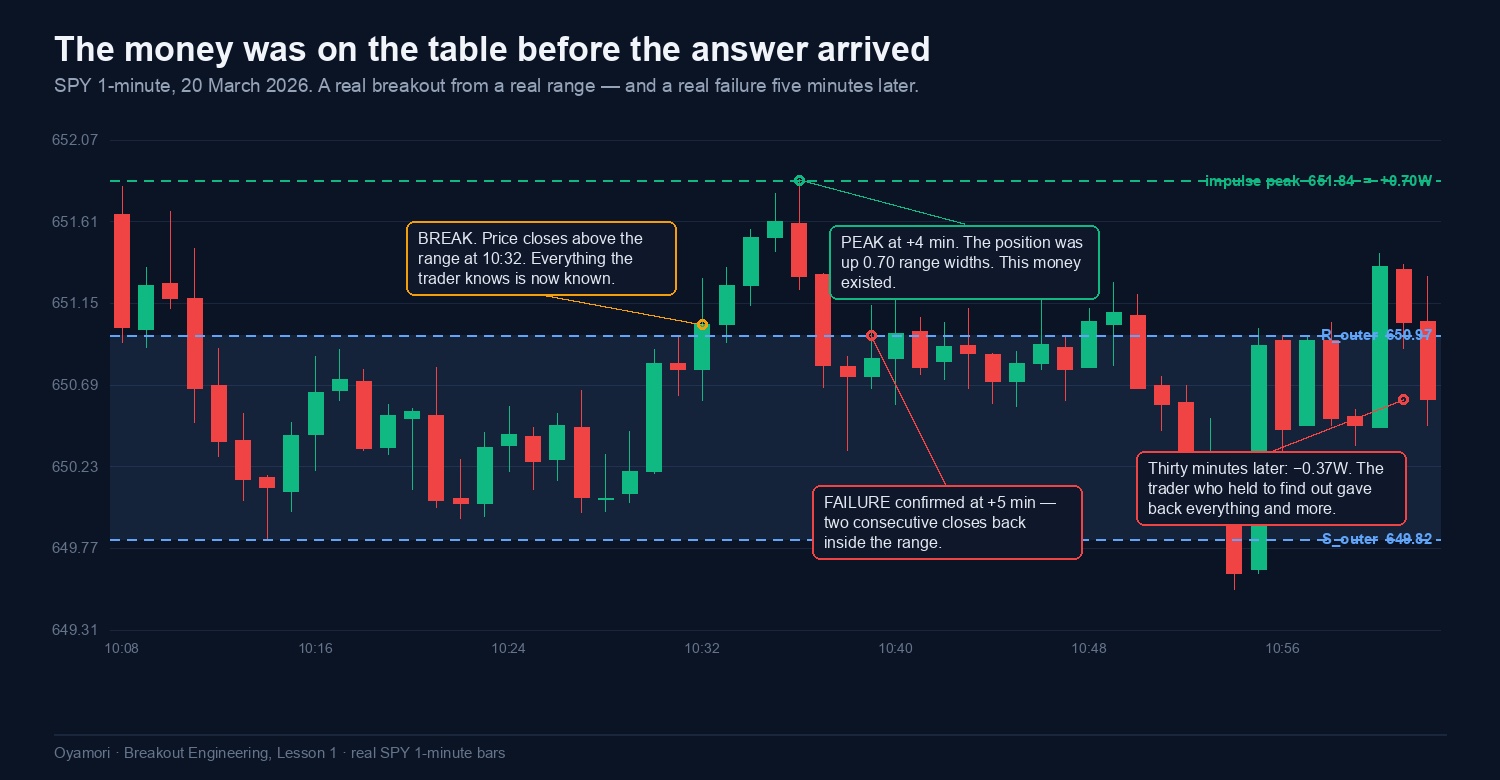
สถานะกำไรขึ้นไปถึง 0.70 ของความกว้างของช่วงราคา ในสี่นาทีหลังการเบรค จากนั้นมันก็ล้มเหลว และสามสิบนาทีต่อมามันอยู่ที่ −0.37 ลำดับเหตุการณ์นี้ไม่มีอะไรผิดปกติ เงินจำนวนนั้นเคยมีอยู่จริง แต่มันไม่ถูกเก็บเกี่ยว เพราะเทรดเดอร์กำลังรอเพื่อดูว่าพวกเขาคิดถูกหรือไม่
เราได้วัดว่าเหตุการณ์นี้เกิดขึ้นบ่อยเพียงใดจากการเบรคเอาท์ 489 ครั้ง และคำตอบอยู่ใน สิ่งที่เกิดขึ้นกับการเบรคเอาท์จริง 489 ครั้ง: การล้มเหลวยังคงสามารถขึ้นไปถึงหนึ่งในสี่ของความกว้างช่วงราคาได้ประมาณครึ่งหนึ่งของจำนวนครั้งทั้งหมด โดยมีค่ามัธยฐานของช่วงเวลาอยู่ที่สี่นาที
การปรับมุมมอง เมื่อกล่าวอย่างถูกต้อง
คำถามไม่ใช่ "การเบรคเอาท์นี้เป็นของจริงหรือไม่?"
แต่คำถามคือ "ตลาดได้พิสูจน์อะไรมาแล้วบ้างจนถึงตอนนี้ และสถานะของฉันควรเป็นอย่างไร ณ ระดับการพิสูจน์ในขณะนี้?"
คำถามนี้มีคำตอบในทุกขณะ และคำตอบจะเปลี่ยนไปเมื่อมีหลักฐานปรากฏขึ้น ขนาดของสถานะ (Position size) จะไม่เป็นเพียงการเดิมพันครั้งเดียวที่วางไว้ตอนเริ่มต้น แต่จะกลายเป็นฟังก์ชันของหลักฐานที่ปรากฏ
| หลักฐานจนถึงตอนนี้ | สิ่งที่ได้รับการพิสูจน์แล้ว | การเปิดสถานะที่เหมาะสม |
|---|---|---|
| ตรวจพบการบีบอัด (Compression) | มีช่วงราคาอยู่และกำลังแคบลง | ไม่มี — เฝ้าสังเกต |
| แรงกดดันที่ขอบเขตกำลังก่อตัว | ฝั่งหนึ่งกำลังถูกผลักดัน | ไม่มี — เตรียมพร้อม |
| ราคาพ้นขอบเขต | Stop cascade กำลังดำเนินอยู่ | เข้าสถานะเริ่มต้นเต็มจำนวน |
| แรงส่ง (Impulse) ขยายตัว | ยืนยันการมีส่วนร่วมของ Momentum | เก็บกำไรครั้งแรก |
| ราคายืนนอกขอบเขตได้ | เริ่มมีการยอมรับราคา (Acceptance) | ลดสถานะลงอีก เพื่อป้องกัน |
| การรีเทส (Retest) ยืนระยะได้ | ขอบเขตเดิมได้เปลี่ยนหน้าที่แล้ว | เหลือไว้เพียง Runner หรือเพิ่มสถานะ |
| โครงสร้างพังทลาย | สมมติฐานสิ้นสุดลง | ศูนย์ |
ไม่มีใครเทรดแบบนี้เมื่อเริ่มเรียนรู้เรื่องการเบรคเอาท์ครั้งแรก คนส่วนใหญ่มาถึงจุดนี้หลังจากผ่านเหตุการณ์เหล่านี้มามากพอ
ลองไล่ดูแต่ละสถานะและดูว่าแต่ละสถานะอนุญาตให้ทำอะไรได้หรือไม่ได้บ้าง:
สิ่งที่คุณต้องจ่าย (ราคาที่ต้องเสียไป)
ความซื่อสัตย์เกี่ยวกับข้อแลกเปลี่ยน เพราะวิธีการนี้ไม่มีอะไรได้มาฟรีๆ
- คุณจะไม่มีวันจับการเคลื่อนที่ได้ทั้งหมด การเก็บกำไรในช่วง impulse รับประกันว่าคุณจะทิ้งเงินบางส่วนไว้กับตัวที่รันเทรนด์ นั่นคือค่าธรรมเนียมที่คุณจ่ายเพื่อให้ได้รับเงินใน 3 จาก 4 ครั้งที่ล้มเหลว
- มันต้องใช้การตัดสินใจมากขึ้น การเข้าหนึ่งครั้งและออกหนึ่งครั้งนั้นง่ายกว่าการวางแผนเป็นระยะๆ หากคุณไม่สามารถดำเนินตามแผนภายใต้ความกดดันได้ การตัดสินใจที่เพิ่มขึ้นจะทำให้เสียมากกว่าได้
- ต้องมีอย่างน้อยสองสัญญาหรือสองหน่วย จึงจะใช้วิธีนี้ได้ หากมีเพียงหนึ่งเดียว คุณทำได้เพียงเก็บเกี่ยวหรือมีส่วนร่วม — แต่ไม่สามารถทำทั้งสองอย่างพร้อมกันได้
สิ่งที่คุณควรได้รับจากบทเรียนนี้
- การเบรกเอาท์ (breakout) คือ ลำดับของสถานะ (sequence of states) ไม่ใช่แค่แท่งเทียนที่ตัดผ่านเส้น
- แรงส่ง (impulse) เป็นเรื่องของ กลไก (mechanical) — คือการถูกปลดปล่อยของคำสั่งที่รออยู่ (resting orders) — และมันจะเกิดขึ้นในทั้งสองผลลัพธ์
- การไปต่อ (Continuation) เป็นเรื่องของ ดุลยพินิจ (discretionary) — ซึ่งขึ้นอยู่กับอุปทาน (supply) ที่คุณมองไม่เห็น
- ดังนั้น: ให้เทรดในส่วนที่เป็นกลไก และปล่อยให้ส่วนที่เป็นดุลยพินิจเป็นเหมือนออปชันฟรีที่จ่ายโดยส่วนแรก
ถัดไป: การบีบตัว (compression) — จุดที่การเคลื่อนที่ถูกสร้างขึ้น และทำไมกรอบที่แคบจึงทำให้แรงส่ง (impulse) ใหญ่ขึ้น โดยที่ไม่ได้ทำให้การเบรกเอาท์มีโอกาสสำเร็จมากขึ้นเลย